
If you work in the field of business brokerage you most likely have heard of the “E-2 Investment Visa”. However, this program is little understood and there are many misconceptions. In the following article I attempt to clarify what this program is and how we as business brokers are uniquely qualified to offer assistance.

Understanding the E-2 Visa Program
The E-2 visa is an investment based nonimmigrant visa, which allows citizens of certain Countries to live and work in the USA by investing in an existing U.S. business. By buying a US based business the E-2 applicant gains the right to live and work in the United States for a limited period of time. Usually, two years with the possibility of subsequent 2-year extensions. There is no limit to the potential number of extensions. The spouse and unmarried children (under 21) of the applicant may also join them in the US. Once here the spouse can apply for permission to work.
There is a second type of investment visa known as the EB-5. This differs in two important respects from the E-2. First of all, the amount of required investment for an EB-5 is significantly higher. Secondly the EB-5 is an immigrant program offering permanent residency to the investor. In this article I will focus on the E-2 program as this is the one you will most likely encounter.
The E-2 program requires a “substantial investment”, but no specific amount is set by law, so this is somewhat open to interpretation.
It is important to understand the type of business that will qualify for an E-2 investment. I look for small businesses with W2 employees. A business that can provide an income to support the investor and his/her family. The applicant will need to provide the immigration service with a business plan. They will want to establish a Company, typically LLC and obtain a Federal Tax number – EIN. Next a bank account should be opened in the United States. This can be a difficult step and the investor will likely need to be present to do this. Lastly the funds for the investment should be deposited in the Bank. These funds will need to be “sourced” to show their origin.
At this time the applicant will complete their due diligence on the business and accomplish the other normal steps of an acquisition. The attorney now submits the application to the Immigration Service. In the penultimate step the applicant will be called for an interview at the Embassy in their Country of origin. If everything goes well at the interview the Visa will be approved.
When working with an E-2 applicant my advice is that they retain a US based Immigration Attorney. This is a complex process, and the applicant will require assistance from an experienced Lawyer. I will not work with an E-2 applicant until they have engaged the attorney and put us in contact as we must work together.
The role of the business broker is critical in this process. We located a suitable business and made the necessary introductions. As with any deal we guide buyers and sellers through the process. The process from beginning to end will typically take six months or more. So, patience on the part of all parties is required. However, once an E-2 investor is committed I have never seen them back out of a deal due to cold feet.
The commitment of the buyer and the special circumstances involved make this a very rewarding deal for the Broker to bring to a successful close.
Yi Lee is an immigration lawyer with the law firm of David Vedder in Daytona Beach. In preparation for this article, I asked him several questions. I found his answers so informative that I have included the discussion below.
We typically suggest for minimum investment to be around $150,000 but I have had one approved for $90k. We like the range of $150k to $250k.
To qualify, the investor has to be a citizen of the treaty country that shares trade and commerce with the US. Not all countries can avail of the E-2 treaty visa. For example, India and China are not E-2 countries. For the UK, it is not enough to show that the investor is a citizen of the United Kingdom, but the investor must also show domicile in UK proper.
Any bona fide lawful business can be invested for the E-2 benefit. The investment must be substantial, which is determined on a case-by-case basis. Return on investment must be more than marginal. A marginal enterprise is one that does not have the present or future capacity to generate more than enough income to provide a minimal living for the treaty investor.
While creation of jobs, i.e., hiring of employees, is not necessary to obtain the E-2 benefit, it certainly helps to show that the investor is creating US jobs.
The biggest challenge when applying for the E-2 visas at Post is that every consulate has slightly different requirements. Overall, however, I have experienced that E-2 Officers are generally very reasonable and want to approve these visas to drive foreign investment into the US.
One piece of advice I would give to an applicant for an E-2 visa is to document everything! Have an accountant document the source of funds and show that it is a legitimate source. Create the LLC and capitalize the business account, if possible, before submitting the application. An organized application is a readily approvable application!
The typical timeline from application to approval is around 3 to 4 months. The fastest turnaround time I have seen was 2 months.
Anthony John Rigney is the owner and Broker with Quorum Business Advisors, LLC. He entered the business brokerage industry in 2008 and has been a member of the BBF since that time. For several years he served as President of the North Florida District.
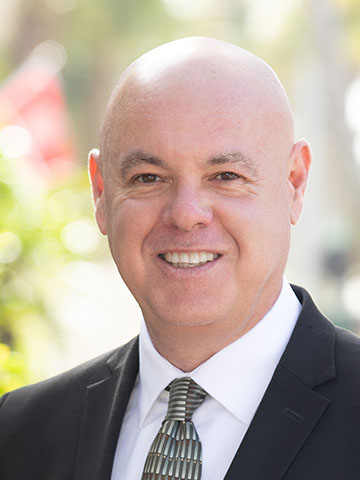
Anthony Rigney
Owner and Broker
Quorum Business Advisors, LLC
Shaping the Future of the BBF
Orchestrating the progress of the BBF as usual, the Board of Directors met on the 22nd of September 2023, in the first in-person session since 2019. It was the first of many future third-quarter face-to-face board meetings. The meeting format was scheduled where the board of directors met in the morning half of the session. Then, the afternoon session was open to all members. It was a pretty good turnout for the open session, with many of the BBF’s top business brokers in attendance, asking questions and providing welcomed suggestions.
We had a full slate of items that needed to be discussed. Some of these items spun off into committees and task forces requiring further in-depth review and discussions to bring back to the board. Beyond the usual financial and Executive Director reports, we had a few items of note. Still, the one that stands out the most is the approval of the agreement and the funding for next year‘s BBF conference at the Caribe Royale in Orlando on August 24 and 25. Many exciting things are happening in the BBF that will soon be announced, so I encourage you to watch for communications through our newsletters and emails.
One item brought up for discussion and unanimously approved by the board was to re-classify/re-name our organization and the wording and acronym that we use to describe our association’s functions from an MLS to the BLS. For many years, we have been utilizing the URL BBFMLS.com. However, MLS or “multiple listing service” is something that typically represents residential or commercial real estate. The BBF, owning the BBFBLS.com, makes it official that we are a Business Listing Service. We start BBF down the path once again as a leader in the industry with the first official BLS in the world.
During the open session of this meeting, we took nominations from across the state district by district. As it was ratified a few years ago in our bylaws, the election process for the BBF Board of Directors and District Advisory Committees now would be conducted by a nomination by individuals across the state for each district. When we implemented this change, we voted as a board to allow any BBF member to sit on the Board of Directors, not just a broker of record. This change allows many more individuals to step up and get on the ballot this year. I’m excited to see this year‘s nominations go out for a vote. You’re going to see a lot of great brokers. Step up into leadership positions to help shape the future of the BBF. So, watch for the election ballot for your state board of directors and district advisory committees over the next few weeks.
What I truly love about being a part of leadership in the BBF is working with such great minds and experienced Brokers. I have built a strong relationship with each individual on the board for the past several years, and it’s good to know that we don’t always see eye to eye. It’s good that we challenge each other and our traditional thoughts so we can introduce fresh ideas. Even though we get along in many different ways, aligning our morals, ethics, and business attitude is critical. We continue to share insight with each other of our personal experiences and ideas to safeguard the future of the BBF and to put it in a stronger position for future leadership to maintain.
I couldn’t be prouder to be a part of laying out the plans for a better, much stronger BBF. I hope that at least one or two of you who read this decide you want to be a part of what makes our association the best. An individual can help out in many ways, even if it’s sitting in on a committee or a task force or dedicating a little bit more time and getting involved in leadership. I hope it encourages several of you to step up and be a part of the leadership and help shape the future of the BBF.

Joe Shemansky CBI, M&AMI, CM&AP
Chairman
Business Brokers of Florida
The Power of Specializing in a Niche
For years, I’d heard the saying: “The riches are in the niches.” Although I believed it, fear prevented me from truly adopting it in my business brokerage practice. I kept asking myself:
- Could I turn away listings outside my niche?
- How much revenue might I lose?
- What if specializing failed?
Though I often considered specializing, I’d revert to listing any business that came my way. However, I met brokers who thrived by focusing on a particular niche. Six years ago, I chose to specialize, and it became the best decision for me.
Why I Chose My Niche: I focused on heating and air businesses. My decision was based on my personal experience owning such a company and understanding its intricacies. I also relocated to a region with low sales volume in this sector. After thorough research, I realized there was potential. A niche doesn’t only mean focusing on an industry like HVAC; it could also be location-based, gender-based, or even based on specific buyer groups. The crucial aspect is to be perceived as the ‘go-to’ or ‘best’ in that niche.
Benefits of Specializing:
- Value Addition: Specializing ensures I deeply understand my clients’ businesses, which wasn’t the case when I was a generalist.
- Focused Marketing: My marketing budget targets a single industry, which increases its efficiency and visibility.
- Targeted Buyers: My potential buyer list has grown specific and valuable since switching.
- Industry Visibility: I participate in all industry events, making sure potential clients recognize me.
- Expertise: My specialization has positioned me as the industry expert, a strong selling point against competitors.
- Deep Knowledge: I focus solely on the nuances of the heating and air business, ensuring I’m always informed.
- Strong Online Presence: I’ve made sure that anyone looking for a specialist in my niche finds me first on all platforms.
- Building a Brand: Embracing a niche allows me to craft a clear and compelling brand narrative.
While I’m obviously biased, I genuinely believe in the value of specializing. If you’re contemplating narrowing your focus, I hope my journey inspires you. I’m here to assist, so don’t hesitate to get in touch.
Patrick Lange is with Business Modification Group based out of Horseshoe Beach, Florida. He specializes in the sale of heating and air companies nationwide. Patrick is the current North Florida Chapter President.

Patrick Lange
Business Modification Group
105 Reasons to Use a Business Broker to Sell Your Business
Selling your business will be one of the biggest decisions of your business life. It also takes a lot of time. Hiring a professional Business Broker, will help you in the process. Managing a business and selling a business are completely different skill sets. Selling a business requires extensive time, knowledge, confidentiality, deal forms, salesmanship, marketing, negotiating skills, and much more. I have documented my own process into 105 steps that most Business Brokers use to get the deal to closing. I consider these 105 reasons why you should hire a Business Broker to sell your business or help you purchase one. We do not all follow the same steps, but the basic process is the same.
Selling a business is not like selling a house. The average business takes 6-12 months to sell and involves a lot of different steps. A Business Broker can help present your company in the best light to maximize the sale price. He or she understands the key values that buyers are looking for and can assist in identifying changes that can lead to a better selling price. Every business is different, with hundreds of variables that have an impact on the value. Business Brokers have access to business transaction databases that can be used as guidelines or reference points.
Deal structure is also especially important as well as the financing. A Business Broker will be able to help negotiate a structure that is beneficial to both the buyer and seller. In addition, understanding the SBA lending rules takes a lot of time to learn, and most business owners do not know all the available options like a business Broker. A deal must be structured in a way that will qualify for lending if lending is involved.
Since the Business Broker’s sole function is to sell the business, there is a much better chance that a deal will be closed in less time. The faster the sale, the lower the risk of employee problems, loss of confidentiality, and customer defection.
A business owner should be aware that there are a variety of valuation methods available to a Business Broker. There is no one-size-fits-all approach when selling a business. Do not be impressed by the Business Broker who presents the highest listing value – you may only be setting yourself up for failure during the sale process. Determining the right selling price takes a lot of research and time. Setting the right price will have a big determination on the sale. I personally send the details of my “Brokers Opinion of Value,” to my clients. As a Business Broker, we must keep the seller’s expectation in check. If a Business Broker values a business at 1 million, but the seller wants 3 million, that is going to be a problem. This is a common issue Business Brokers encounter.

About Jeff Jump
Broker of Record
Jump International Business Brokers
Jeff Jump is the managing Business Broker of Jump International Business Brokers. Jeff previously owned and operated two printing companies for over 15 years. Jeff has a Florida Real Estate Brokers License and is a Certified Business Intermediary® with the International Business Brokers Association®. He is also a member of the Business Brokers of Florida® Association.
Web: www.jumpinternationalbusinessbrokers.com
Email: jeff@jumpinternationalbusinessbrokers.com
Toll Free: 1-800-314-1365
What Makes a Business “Sellable”?
I have been asked a thousand times what makes a good listing? My answer is simple – I want a business with potential to grow, that has three years of rising sales and profits, has perfect financial records and a highly motivated seller. If you can’t find one of them, you might take some listings that don’t quite check all the boxes.
It might be easier to list the things that can make a business not sellable. We have all run into these conditions – sloppy financials, lack of customer diversity, too much family working in the business. The list is long. At the top of the list are seller motivation and seller expectations. Many of the problems can be overcome if the seller is truly motivated and his or her expectations are realistic.
So many people will only sell one business in their life. Because of our association with real estate, many view selling a business like selling a house. It is not. While we share the same license, we are not real estate agents. We are business intermediaries. Our roles are different.
It is the role of the intermediary to set expectations. You are in charge of that! In my experience, expectations must be set before taking the listing. I recently closed a transaction that I worked on for three and a half years. The sellers would not budge on their price (50% above my initial valuation). Under no circumstances would they hold a seller note. They had to have a buyer with direct industry experience. They also had no financials when I met them 3.5 years ago. I was able to keep the listing and achieve success because the seller’s expectations were set. I told them at the beginning this would not be quick. I educated them about the valuation and what was driving that number. I connected them with an accountant and told them to keep running the business. If you continue to grow the business, it will eventually be worth your asking price. They did and it worked.
Usually, the biggest expectation we deal with is price. If my valuation says $500k and the seller wants $1.5 mil, the meeting is over – call me if you need my help. I think it would be unethical – as a professional – to take a listing far above my valuation. By taking that listing you are telling the seller it is possible. That feels like misleading to me.
You can make your listings more sellable. Set reasonable expectations at the beginning. Dig in deep and find the issues that could be a deal stopper. Be prepared to explain the issues and propose solutions. Stay in close contact with your sellers. Update financials monthly. They need to show growth even if it is modest. The trend (direction) is critical.
Your knowledge and training brings a lot of value to the transaction. They can’t do this without us.
Happy selling.

About John W. Hoyt Jr.
Owner
Goldcrest Commercial
Goldcrest Commercial is owned and managed by John Hoyt, Licensed Real Estate Broker. John was first licensed in California in 1975 and obtained a Florida license in 1987. In 1995 John acquired AAA Business Brokers and merged with Goldcrest in 2001. In prior careers John was a Commercial Division Manager for a large national real estate firm overseeing the activities of 10 or more commercial and business brokers. While working as a lender John originated and closed over 500 loans – many to small business owners.
Since joining the industry John has served on State and local Boards of Directors for both Florida Business Brokers Association (FBBA) and Business Brokers of Florida (BBF). He has been recognized as a million dollar plus producer multiple times since 1996 and was recognized as Top Producer Statewide in 2006. John has owned and operated businesses in both the manufacturing and service industries.